✦ Retail Installation Design ✦
Nomad Outdoors is an outdoor lifestyle brand built around adventure, durability, and authentic exploration. We developed a fully immersive in-store installation consisting of three interactive stations — each designed to bring the brand's products and ethos to life at the point of purchase.
The goal was to create a seamless brand experience that engaged customers physically, digitally, and emotionally — turning a retail floor into a destination.

Design an in-store retail installation for Nomad Outdoors that educates, engages, and converts customers through interactive technology and cohesive brand storytelling.
Three distinct interactive touchpoints, designed as one cohesive experience.
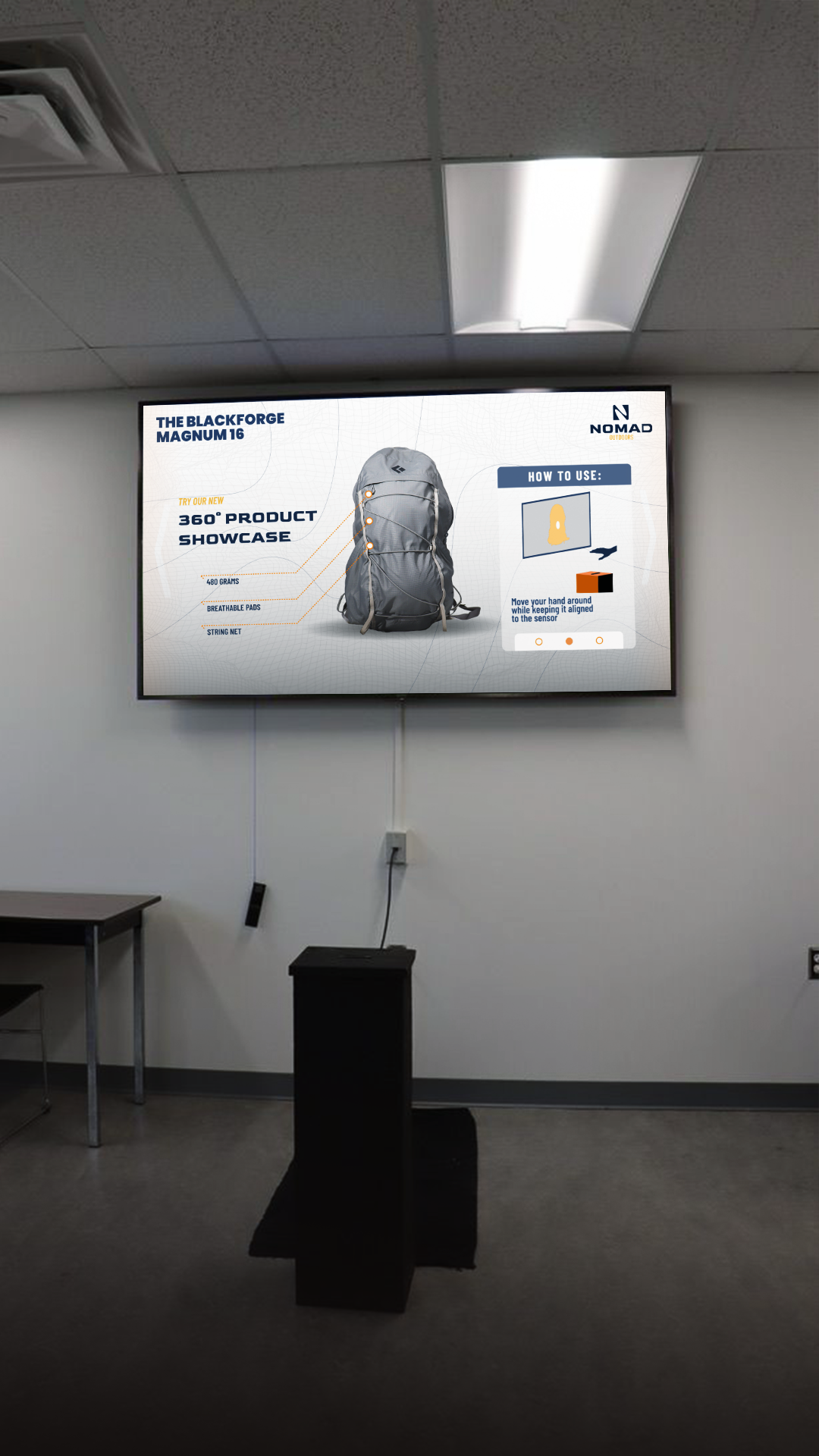
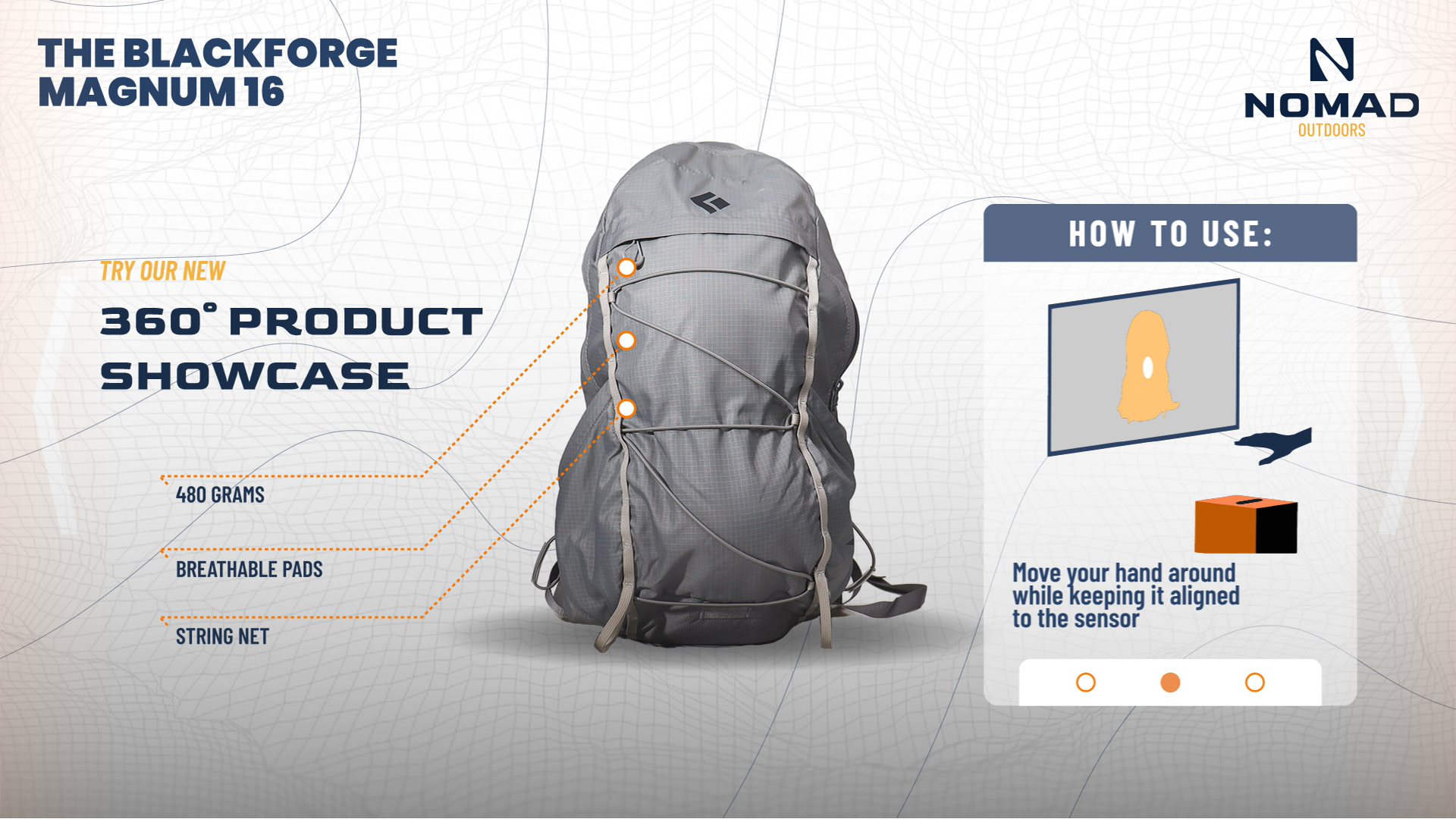
An immersive physical and digital station allowing customers to interact with Nomad Outdoors' hero products in a full 360° environment. Motorized display platforms rotate featured gear while an overhead screen renders real-time product details, materials breakdowns, and use-case scenarios — giving customers a complete picture without needing a sales associate.
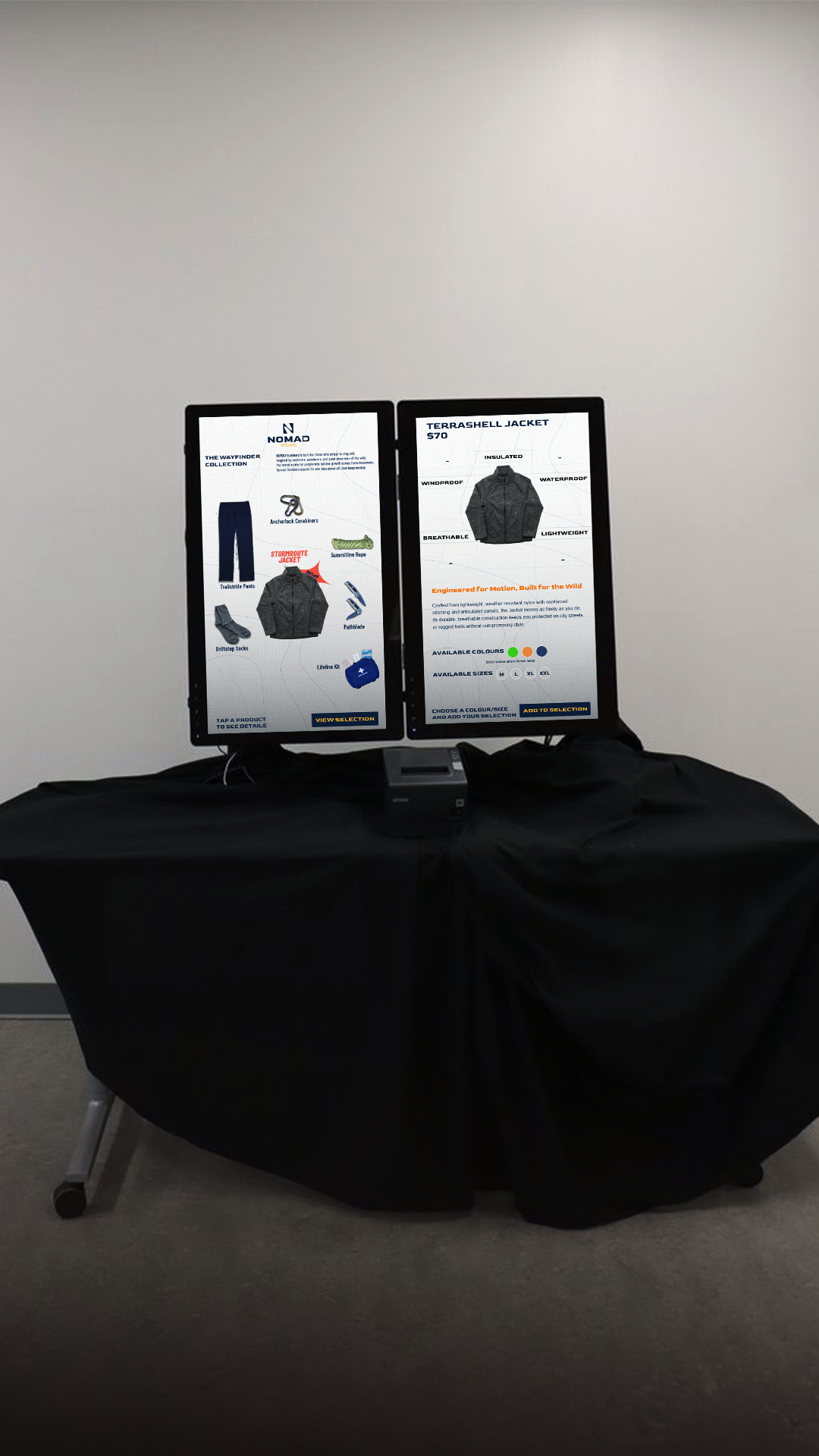
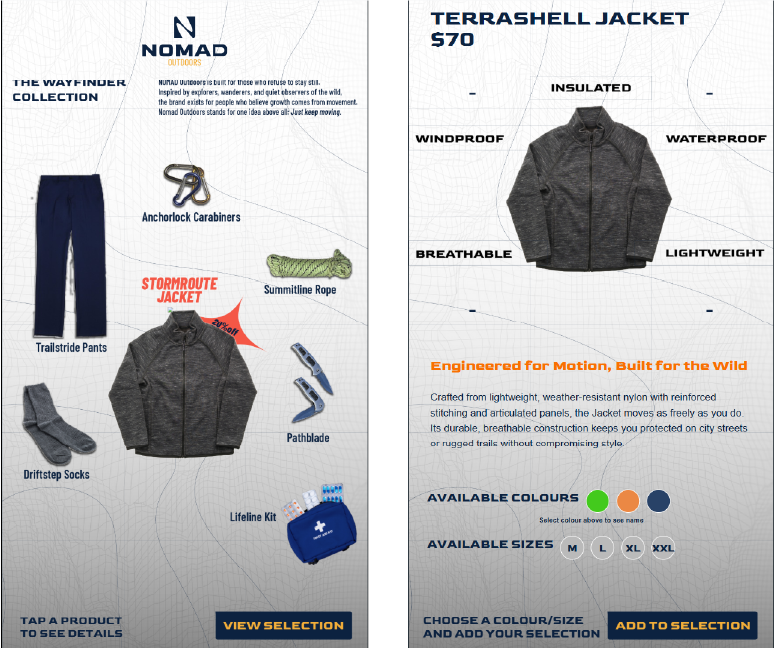
A side-by-side dual touchscreen kiosk presenting the full Nomad Outdoors product catalogue. Customers can browse collections, filter by activity or season, compare products side-by-side, and share selections via QR code. The interface was designed for intuitive self-service — eliminating wait times and empowering the customer.
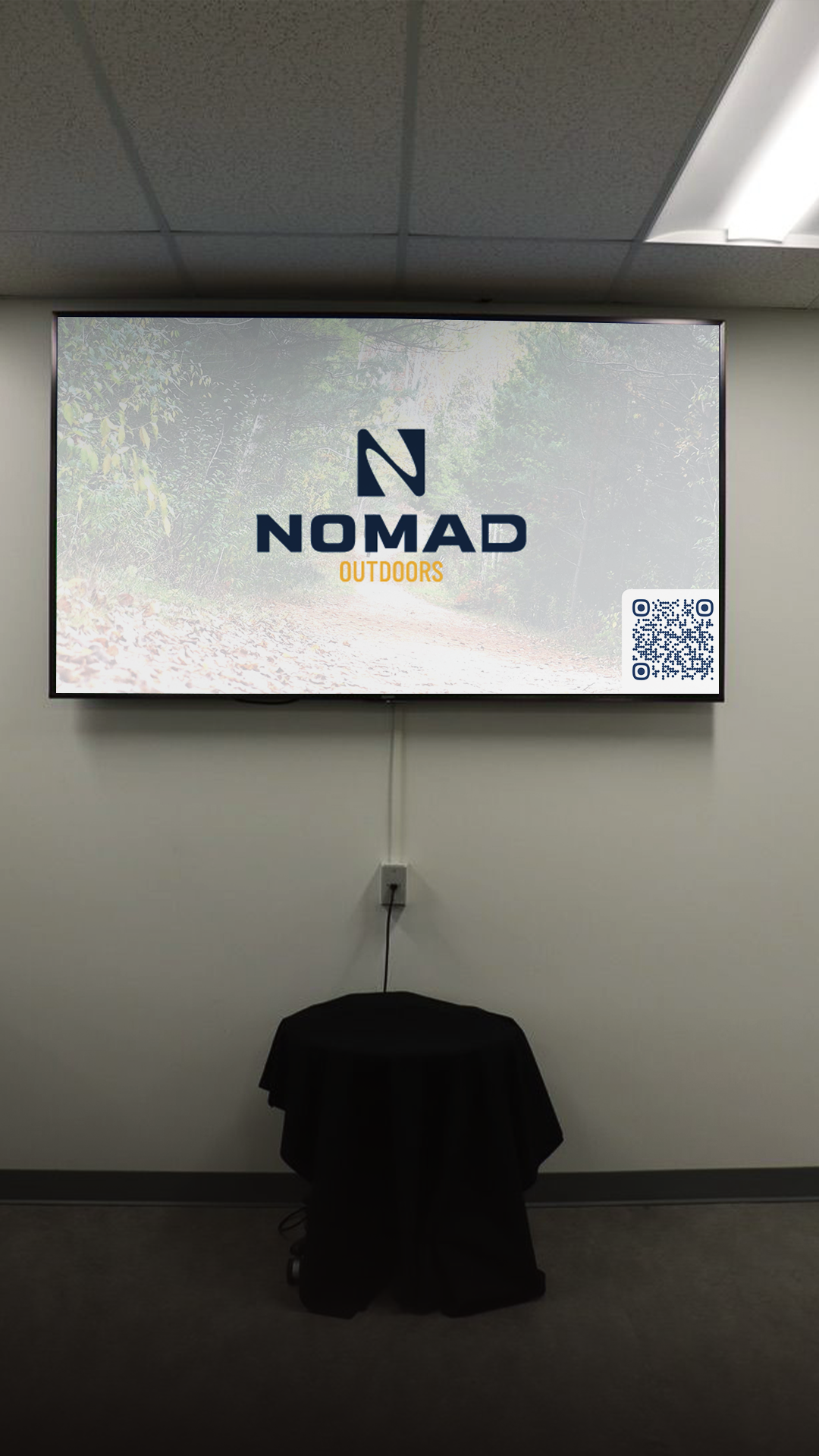
A cinematic viewing station anchoring the installation with a looping brand film. Shot in rugged natural environments, the video communicates the Nomad ethos — freedom, endurance, and the call of the outdoors. Paired with spatial audio and a large-format curved display, this station creates an emotional connection before a single product is touched.
The project began with a deep dive into the Nomad Outdoors brand — its values, customer base, and competitive landscape. From there we mapped the customer journey through the retail space, identifying key moments where interactive media could amplify engagement.
We produced lo-fi wireframes and spatial layouts before moving into high-fidelity UI mockups and physical placement plans. Each station was prototyped independently, then refined to ensure visual and experiential cohesion across the full installation.
This project pushed us to think beyond screens and consider how digital design lives in physical space. Designing for retail meant accounting for ambient light, customer traffic flow, accessibility, and dwell time — constraints that shaped every decision. The result is a body of work that sits at the intersection of brand strategy, interaction design, and spatial experience — exactly the kind of multidisciplinary challenge I want to keep pursuing.